
A printed kankotri carries tradition, weight and the personal visit; a digital kankotri carries every function, the map, updates and reach to guests anywhere. Most Gujarati families now use both: printed kankotris for the first offering to Ganesh, the elders and the closest family, and a digital kankotri for everyone else. This guide compares the two on what matters to families, and shows how to combine them well.
At a glance
What a printed kankotri does best
A printed kankotri is held, placed by the family shrine, and kept. The first kankotri is offered to Ganesh, and many families take printed kankotris to grandparents, the eldest uncles and aunts, and family friends in a visit that is as much a part of the invitation as the card itself. For these guests, the printed card shows a respect a message can't. The first kankotri guide explains the custom.
What a digital kankotri does best
A digital kankotri reaches every guest in minutes, including relatives abroad and friends in other cities. It can carry every function on its own page, with a map link for each venue, a dress code and an RSVP. If the muhurat or a venue changes, the kankotri updates, and anyone who opens the link sees the latest details. It also costs far less, and saves paper. The kankotri format guide shows how the traditional sections translate to pages.
How families combine them
- Print a small number: for Ganesh, the kuldevi, grandparents, senior elders and close family.
- Make the digital kankotri match: the same design, colours and wording.
- Add a QR code on the printed card that opens the digital kankotri with the map and every function.
- Send the digital kankotri to everyone else, with a personal message.
- Call before sending to elders who receive only the digital version.
A QR code on the card
Put a small QR code on the back of the printed kankotri. Elders' families can scan it for the map and every function, without typing anything.
Printing the few you print
- Print on good card; for the people who receive printed kankotris, quality shows respect.
- Ask for a proof and have an elder read every line before the print run.
- Order a few spares for the relatives you'll remember at the last minute.
- Keep envelopes, and a little kumkum and rice for the first kankotri, ready together.
Sending the digital kankotri
Send the digital kankotri with a personal message in Gujarati, after a call to elders. For relatives who'll also receive a printed card, the digital one is a convenient companion with the map and every function. The WhatsApp sharing guide shows how to send it to many guests privately. Keep a list of who has received which version, printed or digital, so nobody is missed.
Cost
Printing costs vary widely with design, paper and quantity. Many families find that printing 30 to 80 kankotris for the people who'll value them most, and sending the rest digitally, costs a fraction of printing several hundred, and lets them spend more on the cards that matter. The printed and digital invitations guide has more on counting.
Elders and the digital kankotri
Many elders now use WhatsApp and are happy to receive a digital kankotri, especially when it comes after a call. For those who aren't comfortable with links, a family member nearby can open it with them, or a printed copy can be sent. The digital invitation for elders guide has more.
Keeping the tradition in a digital kankotri
- Begin with ॥ શ્રી ગણેશાય નમઃ ॥, as on a printed card.
- Keep the traditional sections: the announcement, the mangal prasango, the nimantrak, the tahuko.
- Use the correct honorifics: ચિ., ચિ. સૌ. કાં., અ.સૌ.
- Choose a design with Gujarati motifs: Ganesh, a kalash, a toran, bandhani.
Check before printing
Whichever you choose, have an elder read the Gujarati text before printing or sending. A spelling mistake on a printed kankotri can't be undone.
Related guides
The Gujarati kankotri wording guide has the full text, and the kankotri meaning guide explains the tradition. More are under kankotri and Gujarati weddings.
Questions people ask
Is a digital kankotri acceptable?
Yes. Most Gujarati families now use a digital kankotri for most guests, with printed kankotris for Ganesh, elders and close family.
Should I print kankotris at all?
Many families print a small number for the first offering to Ganesh, grandparents, senior elders and close family.
Can a digital kankotri match the printed one?
Yes. Use the same design, colours and wording, and add a QR code on the printed card that opens the digital one.
What can a digital kankotri do that a printed one can't?
Carry every function on its own page, add map links, update when details change and reach guests anywhere instantly.
How many printed kankotris do families need?
Many find 30 to 80 enough when the rest of the invitations are digital.
Ready-made wedding invitations
Open any design in the editor, put in your own names, dates and wording, and share the invitation link on WhatsApp.
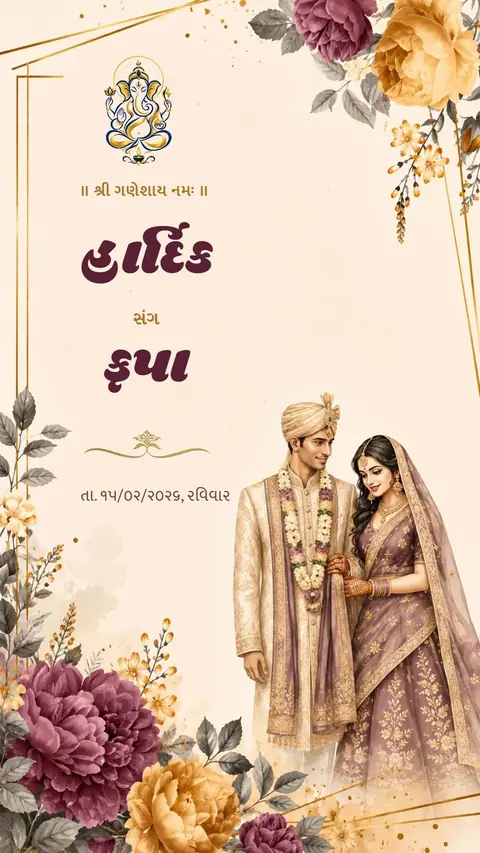 Royal Floral Wedding Invitation₹1,999inc. GST
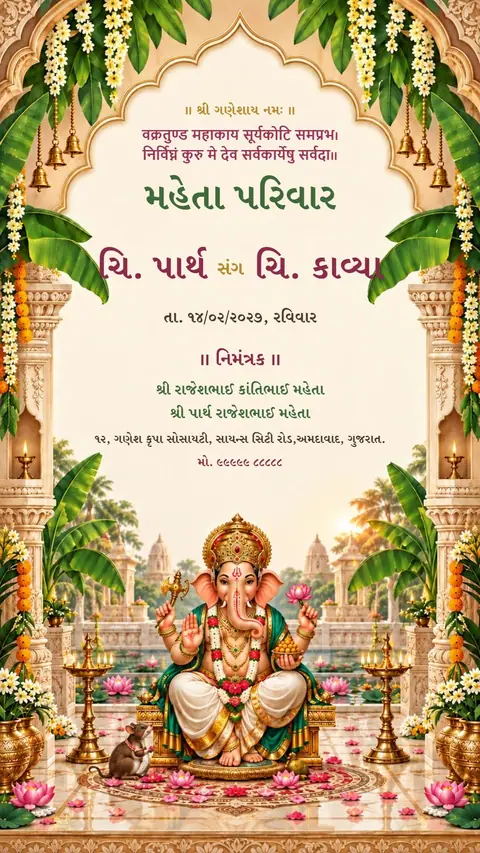 Traditional Wedding Invitation₹1,999inc. GST
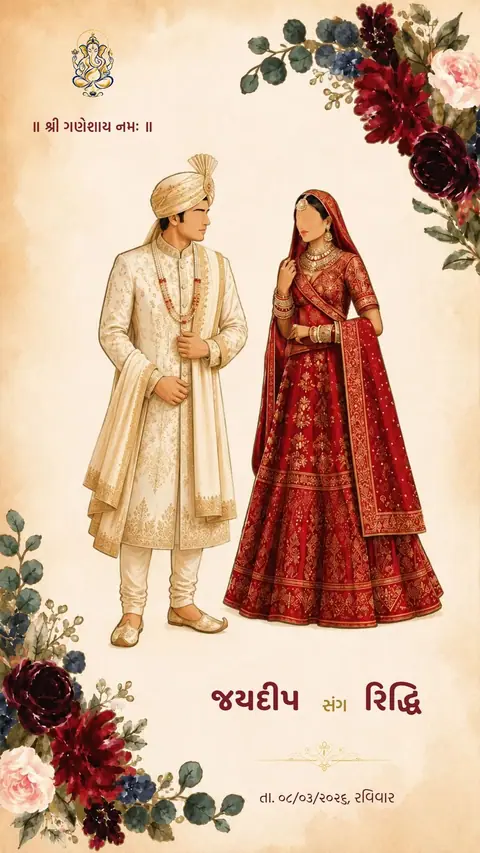 Burgundy Rose Wedding Invitation₹1,999inc. GST
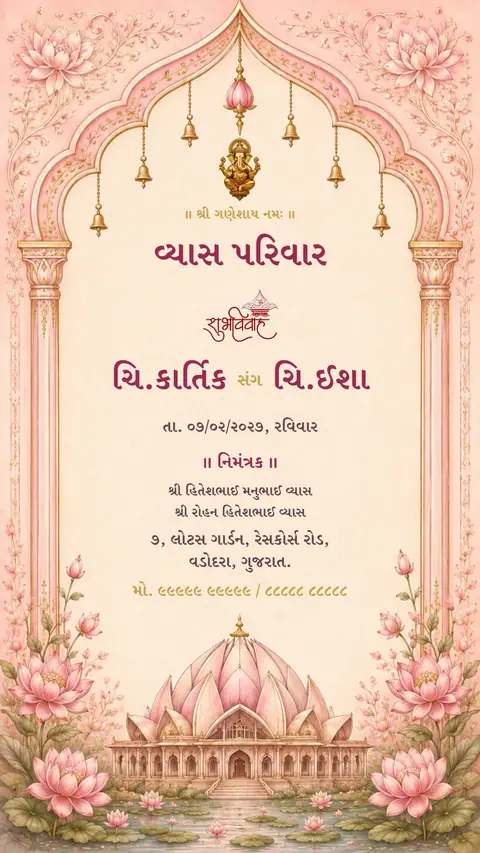 Pink Lotus Wedding Invitation₹1,999inc. GST
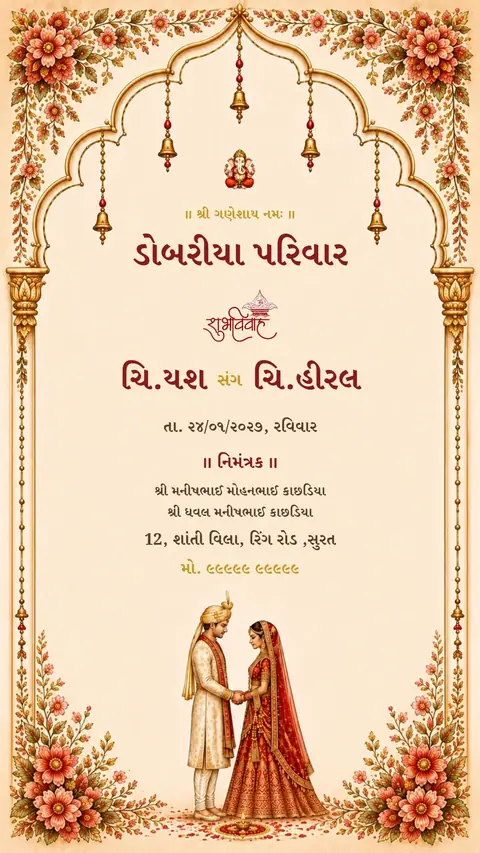 Royal Wedding Invitation₹1,999inc. GST
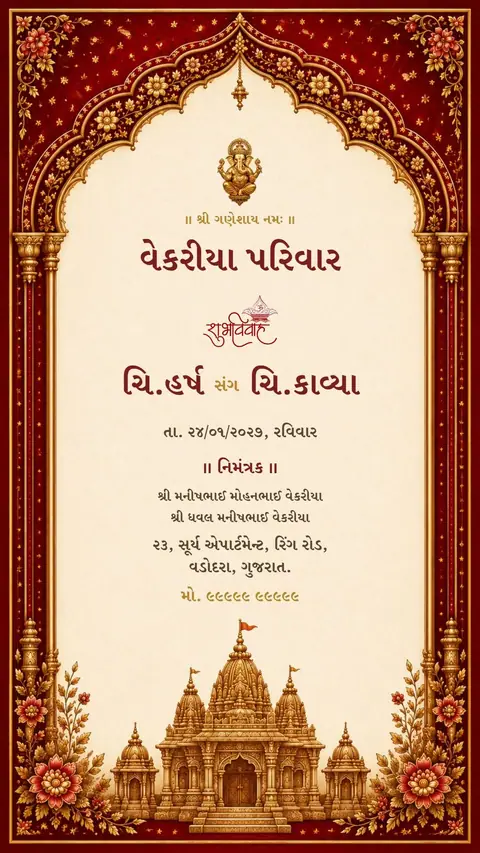 Traditional Indian Wedding Invitation₹1,999inc. GST
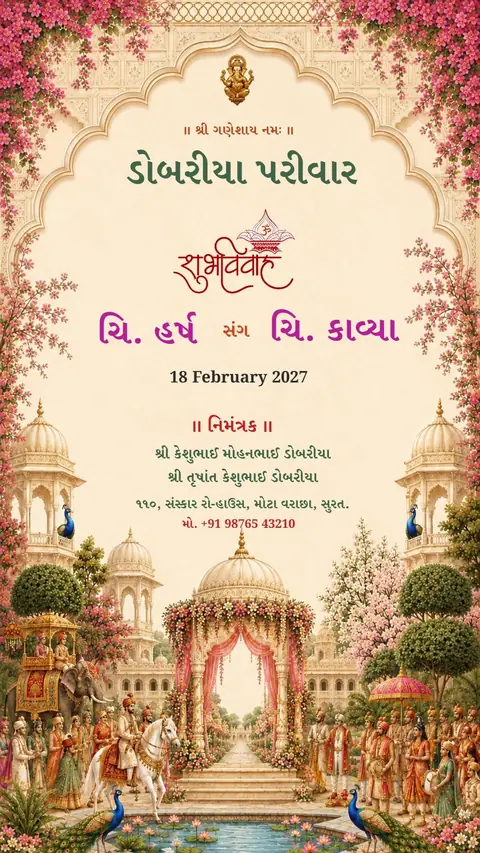 Royal Heritage Wedding Kankotri₹1,999inc. GST
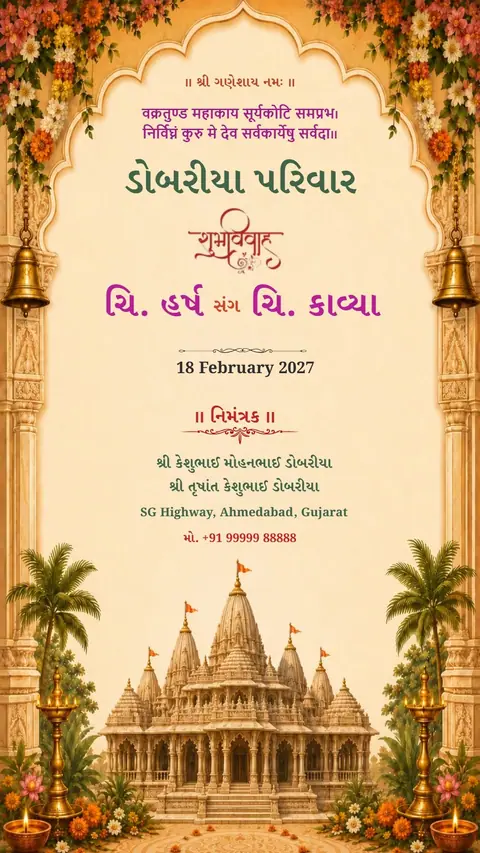 Floral Royal Garden Wedding Kankotri₹1,999inc. GST
Filed under Kankotri & Gujarati weddings
Written by ShubhLink Editorial Team
The team behind ShubhLink's invitation templates and ShubhLink AI. We write down what families ask us most, and check each guide before it goes live.