
The tone of an invitation tells guests what kind of occasion to expect before they read the details. Formal wording, “request the pleasure of your company”, सादर आमंत्रित, પધારશોજી, suits weddings, elders and traditional occasions. Informal wording, “come celebrate with us”, ज़रूर आना, જરૂર આવજો, suits parties, friends and relaxed gatherings. Many invitations use both: formal on the main card, informal in the message. Examples side by side follow.
When each suits
English, side by side
Hindi, side by side
इस शुभ अवसर पर आप सपरिवार सादर आमंत्रित हैं।
आपकी गरिमामयी उपस्थिति प्रार्थनीय है।
ज़रूर आना, तुम्हारे बिना मज़ा नहीं आएगा।
शनिवार को घर पर पार्टी है, आ जाना।
Gujarati, side by side
આ શુભ પ્રસંગે આપ સહપરિવાર પધારશોજી.
આપની હાજરી પ્રાર્થનીય છે.
જરૂર આવજો, તમારા વગર મજા નહીં આવે.
શનિવારે ઘરે પાર્ટી છે, આવી જજો.
Formal in practice
A formal wedding card follows a pattern most Indian families recognise: a shloka or blessing at the top, the parents' names as hosts, the couple's names with honorifics, the request to attend, the functions with dates and times, and the names of the hosts at the end. Its language is respectful and a little more formal than everyday speech, and it reads well to elders and the wider family. The Gujarati kankotri wording guide shows the full formal pattern.
Informal in practice
An informal invitation, for a birthday party, a kitty or a get-together, is closer to how people speak. It starts with a friendly line, gives the essentials plainly, and ends with a warm “do come”. It often uses the guest's name, a little humour, and the language the family speaks at home, including English words where they come naturally.
Choosing for a mixed guest list
When the guest list includes elders, colleagues and friends, a formal invitation with a personal message is the safest choice. The invitation reads respectfully to everyone, and the message adjusts the warmth for each guest: “प्रणाम” for an elder, “Hi Neha” for a colleague, “Yaar, you have to come” for a friend.
Mixing both
Most Indian wedding invitations mix the two naturally. The card itself is formal, from the parents, with honorifics and traditional phrasing. The children's line, the tahuko or bal manuhar, is playful. And the WhatsApp message that goes with the link is personal and warm, in whatever tone suits the guest. This mix reads respectfully to elders and warmly to everyone else.
Formal card, warm message
Keep the card formal and let the message carry the warmth. You can send the same invitation to an elder and a school friend with two very different messages, and both will feel right.
Words that set the tone
Formal phrases, simplified
Some formal English phrases on Indian cards are longer than they need to be. “Solicit your gracious presence with family and friends on the auspicious occasion” can simply be “request the pleasure of your company”. Formal doesn't have to mean complicated; it means respectful and clear. Elders appreciate clarity as much as anyone.
Tone in messages to elders
Even when the invitation is informal, messages to elders should stay respectful: a greeting such as प्रणाम or જય શ્રી કૃષ્ણ, the respectful आप or આપ, and a warm request rather than a casual “come na”. A short call before the message is the most respectful step of all. Elders rarely mind an informal invitation; they notice how they're addressed.
Common mismatches
- A formal wedding card sent to friends without a personal message.
- Slang in an invitation to elders.
- Mixing formal and informal within one sentence.
- Translating formal English word for word into Hindi or Gujarati, which can sound stiff.
Respectful forms
Using तुम or તું in an invitation to elders can read as disrespectful. Use आप or આપ for elders and anyone you'd address respectfully.
Related guides
The English wedding card matter guide, the Hindi card matter guide and the Gujarati kankotri wording guide show formal wording in full, and the messages for friends guide shows the informal side. More are under wording guides.
Questions people ask
When should invitation wording be formal?
For weddings, elders, religious occasions, corporate events and milestone celebrations.
When is informal wording better?
For parties, friends, children's birthdays and relaxed gatherings.
Can an invitation be both formal and informal?
Yes. Many keep the card formal, the children's line playful and the message personal.
What are formal invitation words in Hindi and Gujarati?
सादर आमंत्रित, निवेदक in Hindi, and પધારશોજી, લિ. in Gujarati.
Should I use आप or तुम in an invitation?
आप for elders and anyone you'd address respectfully; तुम only for close friends.
Ready-made invitation designs
Open any design in the editor, put in your own names, dates and wording, and share the invitation link on WhatsApp.
 Royal Palace Journey Cinematic Wedding Invitation₹3,499inc. GST
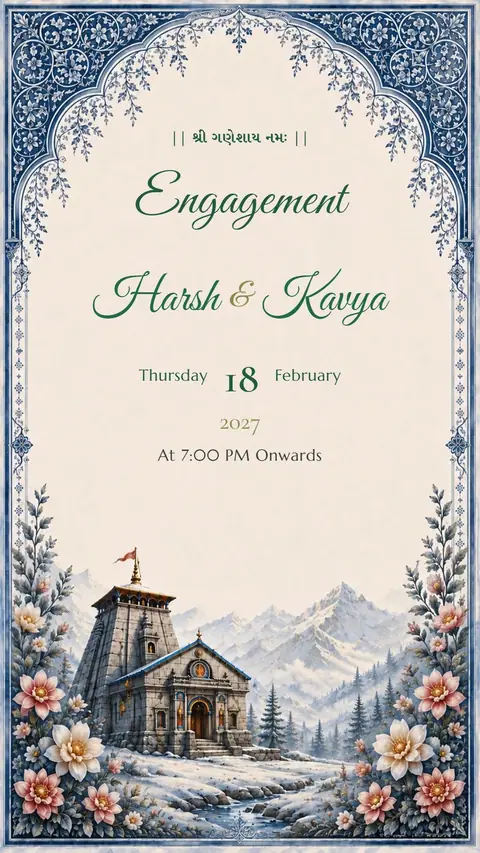 Himalayan Temple Engagement Invitation₹1,499inc. GST
 Godh Bharai Baby Shower Invitation₹499inc. GST
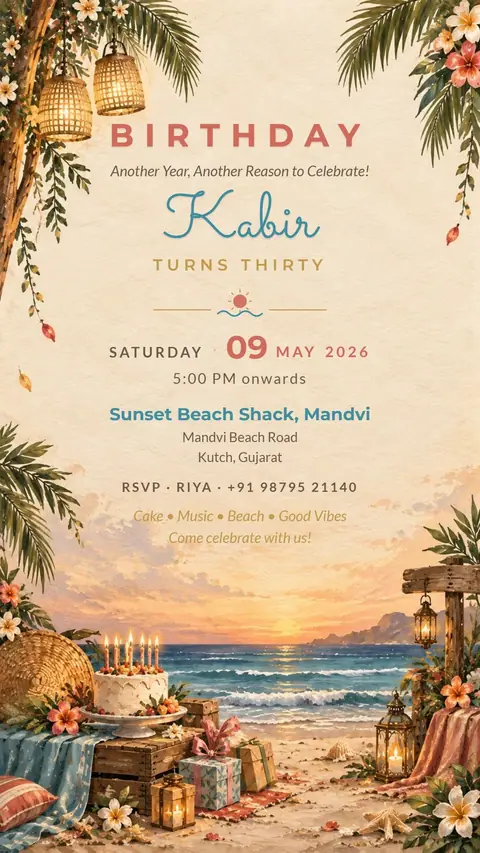 Beach Birthday Invitation₹499inc. GST
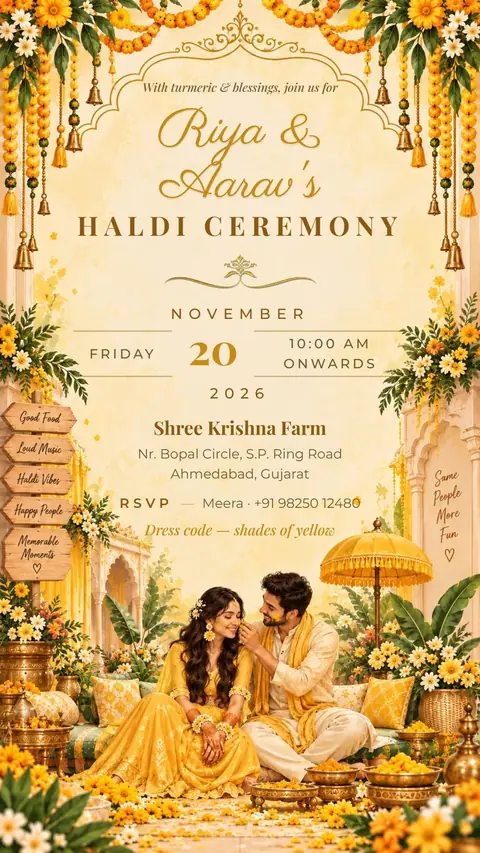 Haldi Ceremony Invitation₹499inc. GST
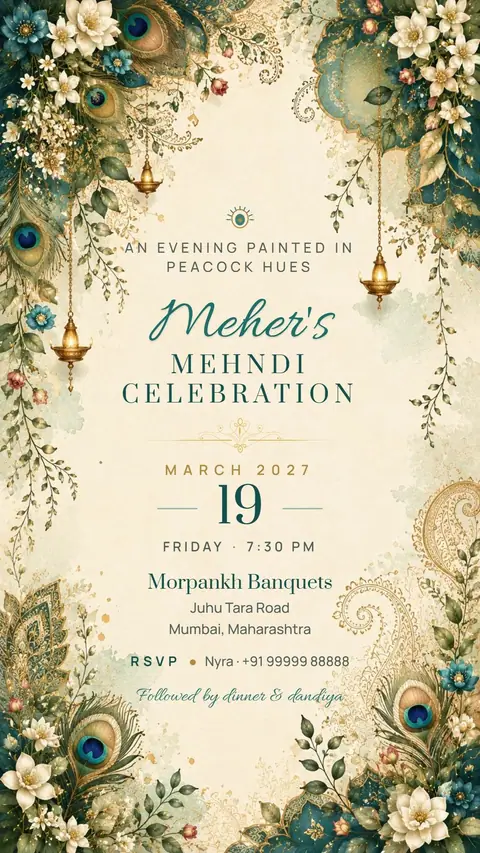 Peacock Teal Mehndi Invitation₹499inc. GST
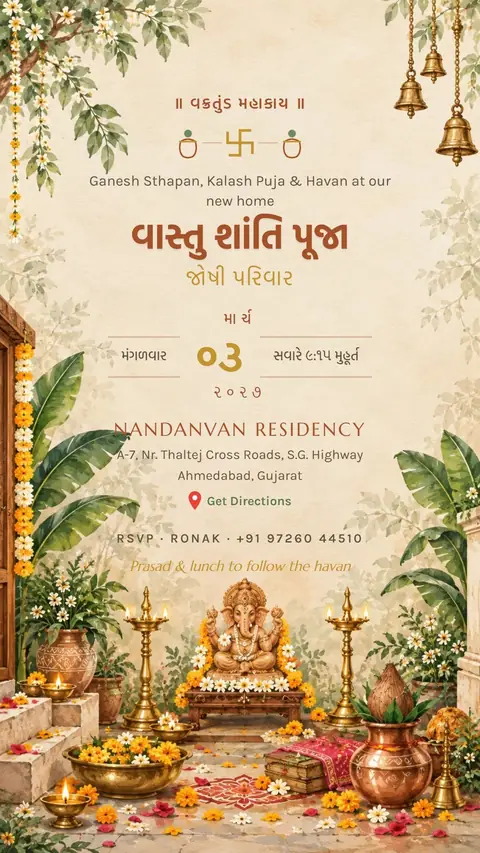 Ganesh Kalash Vastu Puja Invitation₹499inc. GST
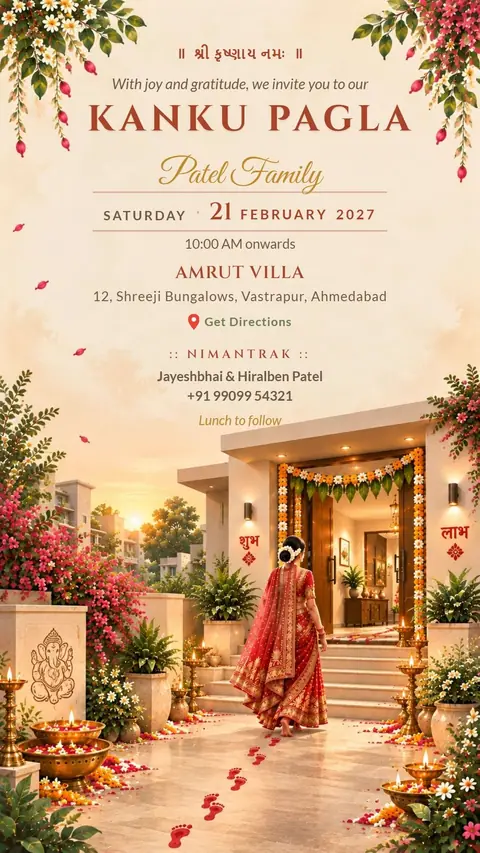 Shubh Labh Kanku Pagla Invitation₹499inc. GST
Filed under Wording guides
Written by ShubhLink Editorial Team
The team behind ShubhLink's invitation templates and ShubhLink AI. We write down what families ask us most, and check each guide before it goes live.