
When two families from different communities, regions or faiths come together, the invitation can reflect both: an opening each family recognises, both families' names given equal weight, the functions of each tradition listed clearly, and languages that every guest can read. The best inter-community invitations are agreed by both families before anything is printed or sent. Practical guidance and wording follow.
Start with a conversation
Before choosing a design or wording, the two families should agree a few things: which functions each family will hold, which language or languages the invitation will use, how each family's names and honorifics will appear, and whether there'll be one shared invitation or two. These decisions shape everything that follows, and agreeing them early prevents hurt feelings later.
One invitation or two
Openings
Many families choose an opening that both recognise, or include one from each tradition. A Hindu-Sikh wedding might open with ॥ श्री गणेशाय नमः ॥ and ੴ; a Hindu-Christian wedding with a short blessing such as “With the blessings of God and our families”. A neutral blessing line works well when the families would rather not choose between traditions.
With the blessings of God and our families
With the blessings of our elders
Names and honorifics
Give both families equal weight: the same size, the same style, the same detail. Use each family's own honorifics, such as Shri and Smt. for one and Mr. and Mrs. for the other, or choose one set for both if the families agree. Check every name with its own family.
Wording
The names, dates and places below are examples.
With the blessings of our elders
Mrs. Meena and Mr. Dinesh Patel
and
Mrs. Harpreet and Mr. Gurpreet Singh
invite you to celebrate the marriage of
Priya and Arjun
Saturday, 12 December 2026
Anand Karaj at 10 am, Gurudwara Sahib, Ahmedabad
Hastmelap at 7 pm, Rajpath Club, Ahmedabad
Listing both families' functions
If each tradition has its own functions, list them clearly with their dates and places, and, for guests from the other community, a short line explaining what each is. A digital invitation can give each function its own page, with a sentence of explanation, a dress code and a map.
Pithi, Friday 11 December, 10 am
The Gujarati haldi: turmeric, songs and laughter. Wear yellow.
Languages
Choose languages that every guest can read: often English as the shared language, with each family's language on its own page for their elders. A Gujarati page for one family's relatives and a Punjabi or Hindi page for the other's makes elders on both sides feel included.
One elder from each side
Ask an elder from each family to read the page in their language before sending. It's a small courtesy that shows respect for both traditions.
One ceremony or two
Some families hold one ceremony that blends both traditions; others hold two, one in each tradition, often on the same day or on consecutive days. Both work. If there are two ceremonies, the invitation should make clear which guests are invited to which, and explain each briefly for guests from the other community.
Food
Food is often where two communities meet most happily. Many families serve dishes from both traditions, label them clearly, and make sure every guest has something they can eat: vegetarian, Jain, halal, or without beef or pork. A line on the invitation such as “a menu from both our kitchens” is a warm touch, and guests often talk about the food long after the wedding.
Dress
Guests often enjoy dressing in the other community's style for a function. A short dress-code note for each function, with a sentence of guidance, helps them: what to wear to a pithi, a mehndi, a church service or an Anand Karaj, including head coverings where needed.
Sensitivity
- Give both families equal space and prominence.
- Explain rituals warmly, never as unusual or exotic.
- Avoid jokes about either community.
- Respect dietary needs on both sides: vegetarian, Jain, halal, no beef or pork.
Talk first
If either family has reservations about the marriage, keep the invitation simple and warm, and talk to the elders personally. A kind conversation does more than any wording.
Related guides
The bilingual kankotri guide covers two-language invitations, and the Anand Karaj guide and the Christian wedding invitation guide cover two traditions often blended with others. More are under wording guides.
Questions people ask
How do I word an inter-community wedding invitation?
Agree the details with both families, give both families' names equal weight, choose an opening both recognise, and list each tradition's functions clearly.
Should there be one invitation or two?
One shared invitation works when the families agree; two invitations with one design suit separate guest lists and customs.
Which language should the invitation be in?
Often English as the shared language, with each family's language on its own page for elders.
How do I explain rituals to guests from the other community?
Add a short, warm line under each function explaining what it is and what to wear.
What opening suits an inter-faith wedding?
One from each tradition, or a neutral blessing such as “With the blessings of our elders”.
Ready-made wedding invitations
Open any design in the editor, put in your own names, dates and wording, and share the invitation link on WhatsApp.
 Royal Palace Journey Cinematic Wedding Invitation₹3,499inc. GST
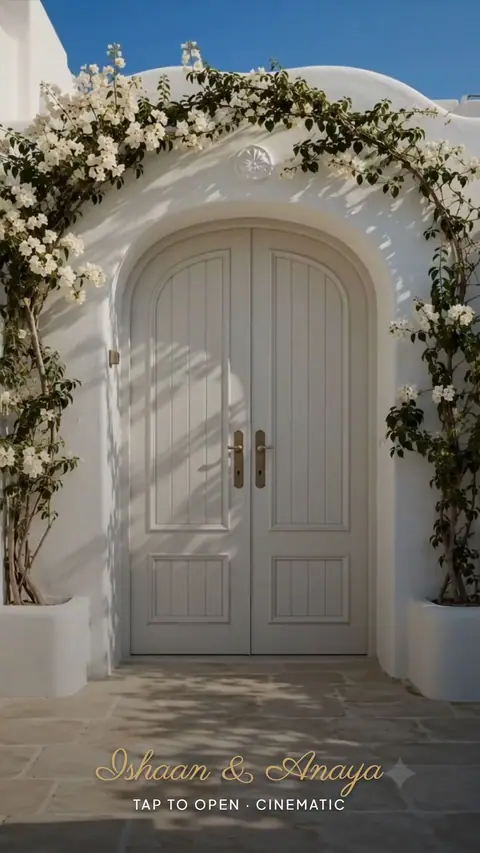 Santorini White Gate Cinematic Wedding Invitation₹2,499inc. GST
 Royal Garden Wedding Invitation₹1,999inc. GST
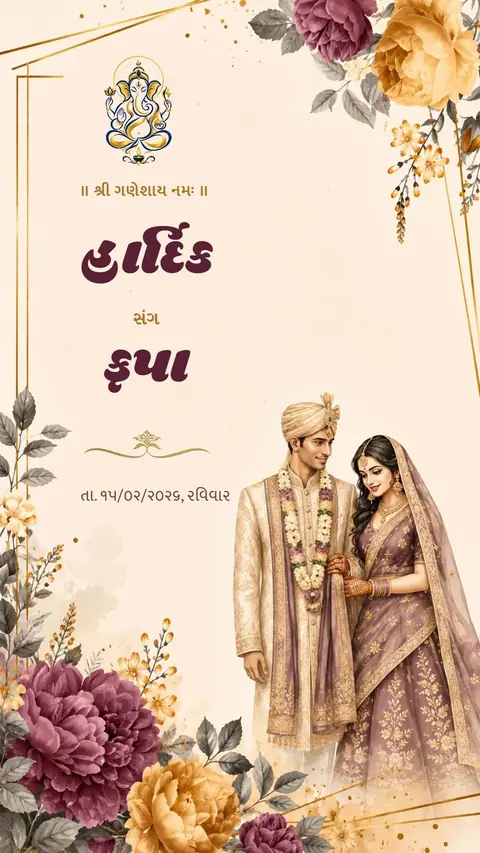 Royal Floral Wedding Invitation₹1,999inc. GST
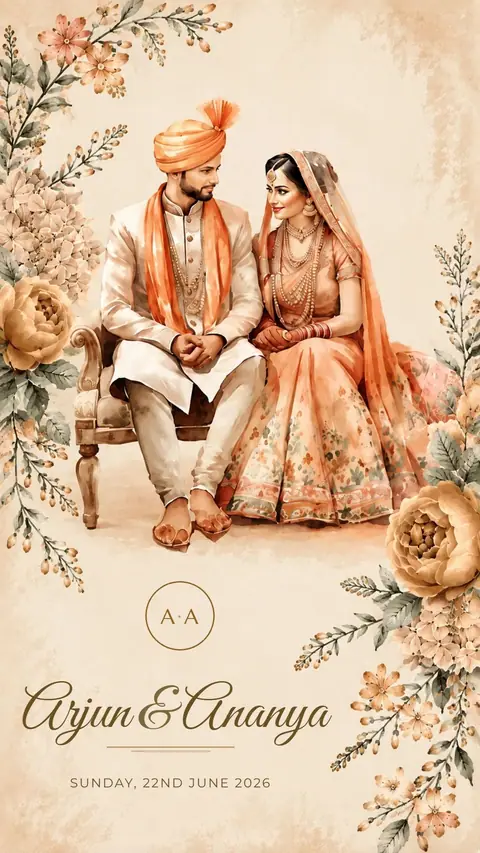 Golden Peach Wedding Invitation₹1,999inc. GST
 Floral Indian Wedding Invitation₹1,999inc. GST
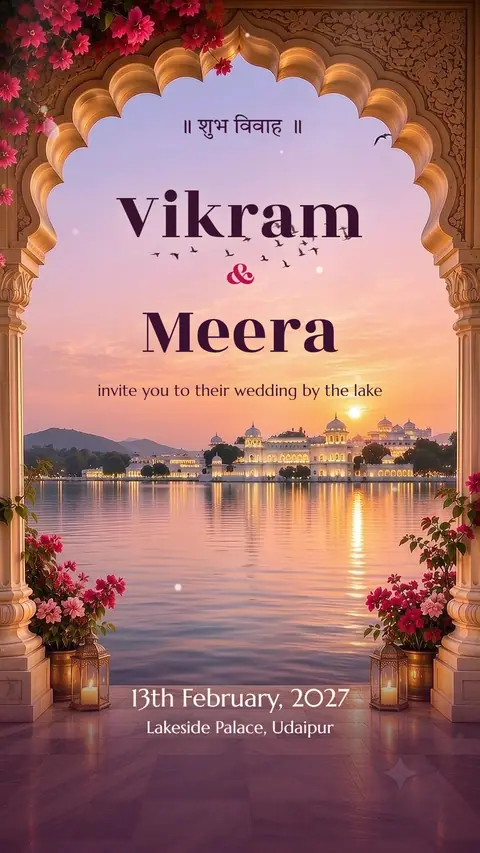 Udaipur Palace Wedding Video Invitation₹1,999inc. GST
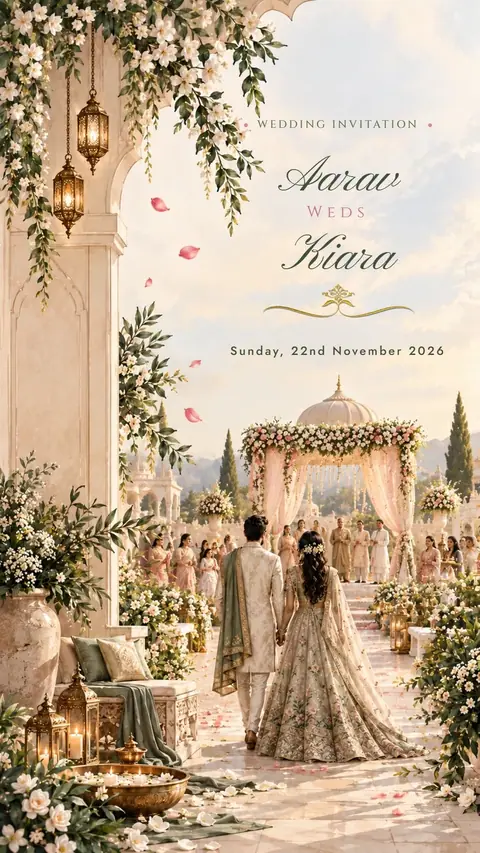 Destination Wedding Invitation₹1,999inc. GST
Filed under Wording guides
Written by ShubhLink Editorial Team
The team behind ShubhLink's invitation templates and ShubhLink AI. We write down what families ask us most, and check each guide before it goes live.