
Many Indian wedding cards mention the muhurat, the auspicious time set by the priest, and some mention the gotra of the families or the lagna. The muhurat matters most to guests, since many plan to be present at that moment. The gotra is a family detail that some communities print and others don't. This guide explains what each is, whether to include it, and how to write it clearly.
Every family differs
Practices vary between communities and families. Follow your elders and your priest.
The muhurat
The muhurat is the auspicious time for the main ceremony, set by the family priest. On the card it often appears as the time of the hastmelap, the pheras or the mangalsutra. Many guests aim to be there for it, so write it clearly, with the date and the day.
હસ્તમેળાપ: શનિવાર, તા. 12-12-2026, સાંજે 7:42 વાગ્યે
शुभ मुहूर्त: शनिवार, 12 दिसंबर 2026, रात्रि 10:15 बजे
Exact minutes
If the muhurat is an exact minute, such as 7:42 pm, write it exactly. Guests understand that the ceremony is timed to it, and it signals that arrival time matters.
Late or early muhurats
Muhurats can fall late at night or early in the morning. When they do, write both the date and the night clearly: “the night of Saturday 12 December, muhurat at 1:15 am on Sunday 13 December”. Give the dinner time separately, so guests who can't stay late can come for dinner and blessings.
After midnight
A muhurat after midnight is on the next calendar date. Write both dates plainly, since guests often get this wrong.
The lagna
The lagna is the astrological moment for the wedding, closely related to the muhurat. Some cards name it, especially in South Indian and some North Indian families; most simply give the time. If your priest gives a lagna name, ask whether to print it; often the time alone is what guests need.
The gotra
The gotra is a family lineage, traditionally traced to a sage. In many Hindu weddings the gotras of both families are recited during the ceremony. Some communities print the gotra on the card, especially in certain Marwari, Bihari and South Indian families; many Gujarati families don't. There's no rule: follow your family's practice, and ask the elders.
Writing the date with a tithi
Traditional cards sometimes give the Hindu calendar date, the tithi, alongside the Gregorian date: the month, the paksha and the tithi. If you include it, ask the priest for the exact wording, and always give the Gregorian date too, since that's what guests use to plan.
માગશર સુદ ત્રીજ, શનિવાર, તા. 12-12-2026
Choosing the muhurat
The family priest sets the muhurat from the horoscopes, the calendar and the season. Families often receive two or three options and choose the one that suits the venue, the guests' travel and the family's plans. Once it's fixed, everything else follows: the venue booking, the arrival times, the dinner, the order of the functions. Put the priest's note with the exact muhurat somewhere safe, since you'll check it more than once.
Arrival time and muhurat
If guests should arrive well before the muhurat, for the welcome or the baraat, write the arrival time separately: “Baraat welcome at 6 pm, muhurat at 7:42 pm”. Many guests will plan to arrive just before the muhurat; telling them about the earlier welcome lets those who'd like to see it come on time.
Muhurats for other functions
The priest may give muhurats for other rituals too: the mandap muhurat, the grah shanti, the pithi. List these on the kankotri with their times, since close family will plan around them. For functions without a muhurat, such as the sangeet, give a practical start time instead. Keep the two kinds of time clearly separate, so guests know which are fixed and which are flexible.
What guests actually need
- The date and the day of the week.
- The muhurat or ceremony time.
- The arrival or welcome time, if different.
- The meal time.
- The venue and map.
Gotra, lagna and tithi are meaningful to the family and to elders; the time and the place are what every guest needs. Make sure the essentials are clearest.
Related guides
The Gujarati kankotri wording guide and the Hindi card matter guide show where these details sit on a card, and the wedding functions schedule guide covers timings. More are under wedding events.
Questions people ask
Should the muhurat be on the wedding card?
Usually, yes. Many guests plan to be present at the muhurat, so write it clearly with the date and day.
Should the gotra be printed on the wedding card?
Some communities print it and many don't. Follow your family's practice and ask the elders.
What is the lagna on a wedding card?
The astrological moment for the wedding, closely related to the muhurat. Many cards simply give the time.
How do I write a muhurat after midnight?
Write both dates plainly, such as the night of Saturday 12 December, muhurat at 1:15 am on Sunday 13 December.
Should the tithi be on the card?
Some traditional cards include it alongside the Gregorian date. Ask the priest for the wording.
Ready-made wedding invitations
Open any design in the editor, put in your own names, dates and wording, and share the invitation link on WhatsApp.
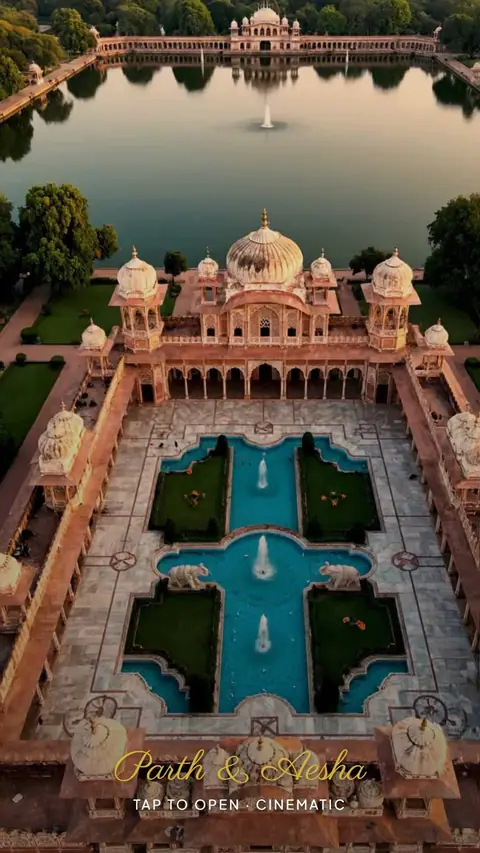 Royal Palace Journey Cinematic Wedding Invitation₹3,499inc. GST, was
₹6,998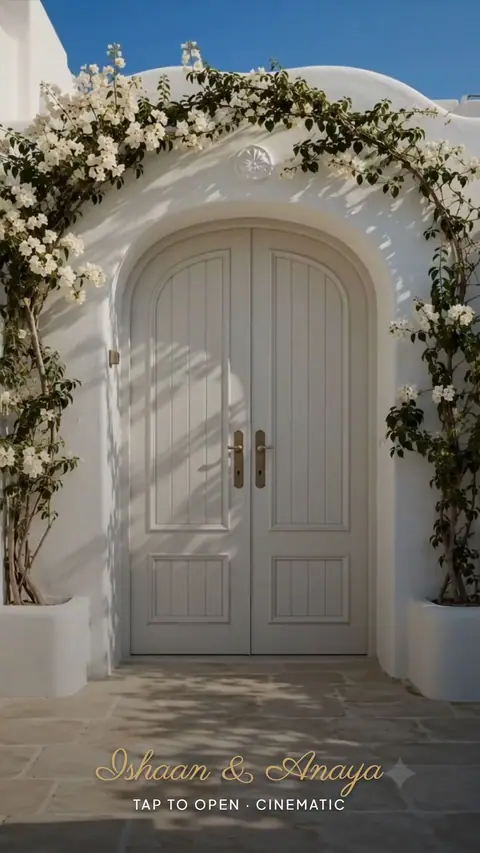 Santorini White Gate Cinematic Wedding Invitation₹2,499inc. GST, was
₹4,998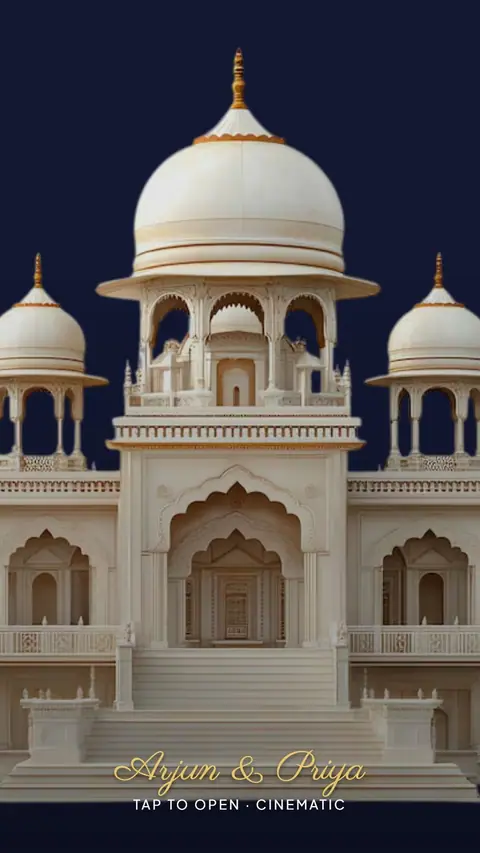 Royal Garden Wedding Invitation₹1,999inc. GST, was
₹3,998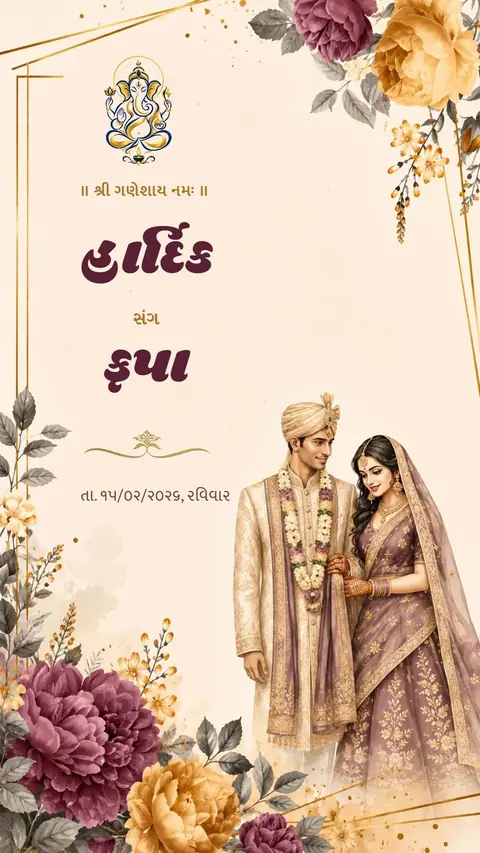 Royal Floral Wedding Invitation₹1,999inc. GST, was
₹3,998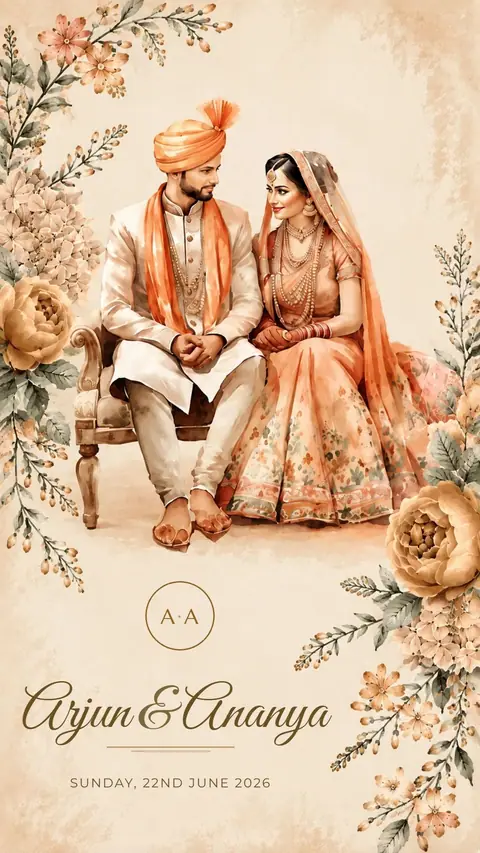 Golden Peach Wedding Invitation₹1,999inc. GST, was
₹3,998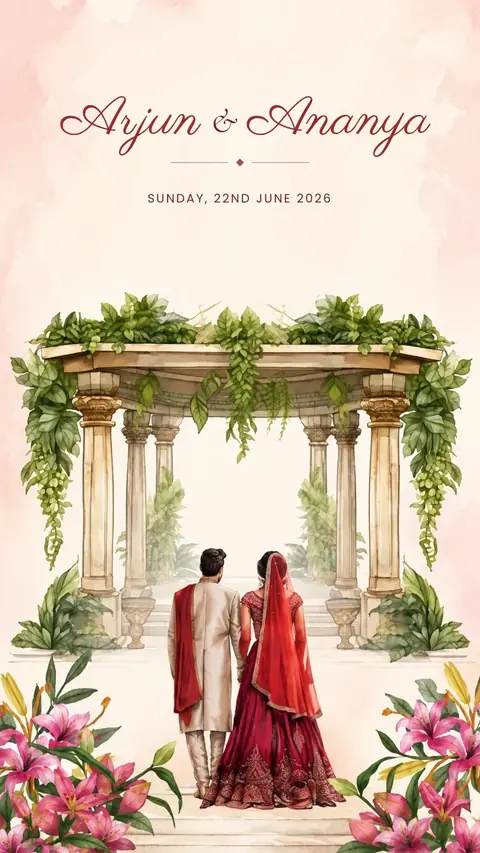 Floral Indian Wedding Invitation₹1,999inc. GST, was
₹3,998 Udaipur Palace Wedding Video Invitation₹1,999inc. GST, was
₹3,998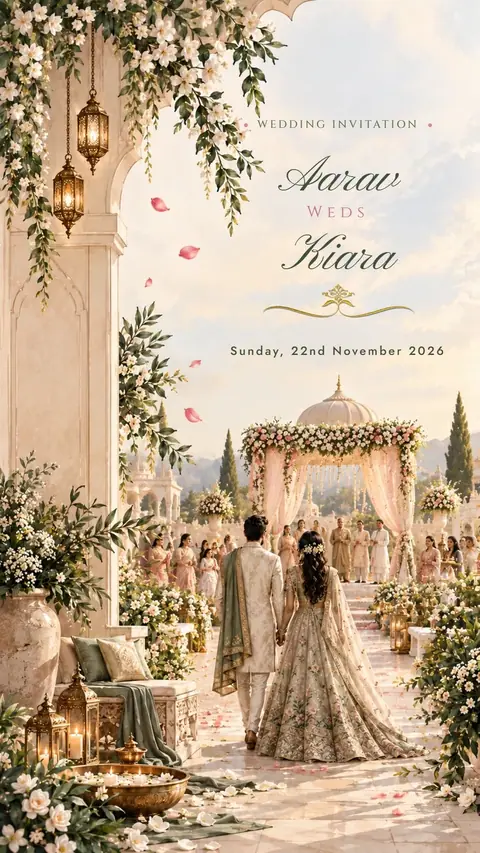 Destination Wedding Invitation₹1,999inc. GST, was
₹3,998
Filed under Haldi, mehndi & wedding events
Written by ShubhLink Editorial Team
The team behind ShubhLink's invitation templates and ShubhLink AI. We write down what families ask us most, and check each guide before it goes live.