A Durga Puja invitation, whether for a neighbourhood pandal, a probashi Bengali association or a family puja at home, gives the days of the puja, from Shashthi to Dashami, the timings of the anjali, the bhog and the evening programmes, and the address. It's festive and warm, often with শুভ শারদীয়া (Shubho Sharodiya), the autumn festival greeting. Wording in English and Bengali, and planning notes, follow.
Check your calendar
Customs and timings vary between pujas, regions and families, and the exact tithi timings change each year. Check your puja's own calendar, and have someone fluent check any Bengali text.
The days of the puja
What the invitation should say
- The dates of each day, Shashthi to Dashami.
- Anjali timings, especially for Ashtami.
- Bhog timings, and whether guests should register.
- Evening programmes: cultural events, dhunuchi naach, performances.
- Sindoor khela, on Dashami.
- The address, with a map link and parking.
Wording samples
The names, dates and places below are examples.
শুভ শারদীয়া
The Bengali Association of Ahmedabad
invites you to Durga Puja
Shashthi to Dashami
Community Hall, Satellite, Ahmedabad
Ashtami anjali at 9 am, bhog from 1 pm
Cultural programmes every evening from 7 pm
Ma is coming home.
The Banerjee family invites you to our Durga Puja
Ashtami anjali at 9:30 am, followed by bhog
B-12, Rose Garden Society, Vadodara
Shubho Sharodiya. Our Ashtami anjali is at 9:30 am this Saturday, with bhog after. Do come with the family.
Bengali greetings
শুভ শারদীয়া
শুভ বিজয়া
শুভ শারদীয়া (Shubho Sharodiya) is the greeting for the autumn festival, and শুভ বিজয়া (Shubho Bijoya) is exchanged after Dashami. Many families visit elders after Bijoya to seek blessings and share sweets.
Bhog
Bhog is the food offered to the goddess and shared with devotees, and for many visitors it's the highlight of the day. Community pujas often ask members to register or buy coupons for bhog, so the kitchen knows the numbers. If your puja does, say so on the invitation, with the deadline, so guests aren't turned away at the counter.
Evenings at the pandal
Evenings are for the arati, the beat of the dhak, dhunuchi naach, when dancers move with smoking clay censers, and cultural programmes: music, dance, plays and children's performances. Many associations publish a programme for each evening. Share it with the invitation, or send it as a separate page, so guests can choose the evening they'd most like to attend.
Sindoor khela
On Dashami, after the farewell puja, married women apply sindoor to the goddess and then to each other, in a joyful, colourful ritual called sindoor khela. If your puja holds it, mention the time; many women plan their day around it, and it's one of the most photographed moments of the festival.
Probashi pujas
Bengali communities outside Bengal, the probashi Bengalis, hold some of the warmest pujas, often organised by associations that bring the community together for five days. Their invitations often go to members, friends and neighbours of every background, and many pujas welcome the whole city. If you're organising one, a clear invitation with every day's timings helps newcomers join in.
Planning a puja
- Book the priest early; the busiest days are fixed by the calendar.
- Plan the bhog: khichuri, labra, beguni, chutney and payesh are traditional favourites.
- Organise the anjali: flowers, bel leaves and a clear space for devotees.
- Arrange cultural evenings: music, dance, dhunuchi naach, children's performances.
- Plan sindoor khela on Dashami for married women.
- Keep crowd management in mind for a community puja: entry, queues, parking.
Daily timings
Share the anjali and bhog timings in the group the evening before each day. They're the details people ask about most, and they change with the tithi.
For guests from other communities
Durga Puja welcomes everyone, and pandals in every city draw visitors of all backgrounds. If you're inviting friends who haven't been before, tell them what to expect: the anjali in the morning, the bhog at lunch, the evening programmes, and the dhak drums. Many guests come especially for the bhog and the evening atmosphere.
Crowds and fire
Community pujas draw large crowds. Plan entry, exits and crowd flow with care, keep fire safety around lamps and dhunuchi, and coordinate with local authorities as needed.
Related guides
The Bengali wedding invitation guide covers more Bengali traditions, and the garba night guide covers the Navratri celebration held at the same time in Gujarat. More are under festivals.
Questions people ask
What should a Durga Puja invitation include?
The days from Shashthi to Dashami, the anjali and bhog timings, evening programmes, sindoor khela and the address.
What does Shubho Sharodiya mean?
A greeting for the autumn festival, written শুভ শারদীয়া in Bengali.
When is the Ashtami anjali?
On the morning of Ashtami. The exact time follows the tithi, so check your puja's calendar.
What is bhog at Durga Puja?
The food offered to the goddess and shared with devotees, often khichuri, labra, beguni, chutney and payesh.
Can guests from other communities attend Durga Puja?
Yes. Pandals welcome everyone, and many guests come for the bhog and evening programmes.
Ready-made invitation designs
Open any design in the editor, put in your own names, dates and wording, and share the invitation link on WhatsApp.
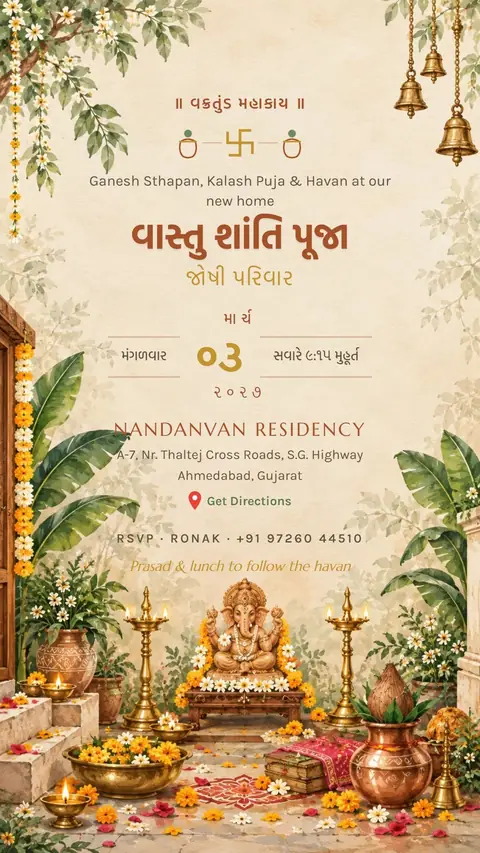 Ganesh Kalash Vastu Puja Invitation₹499inc. GST, was
₹998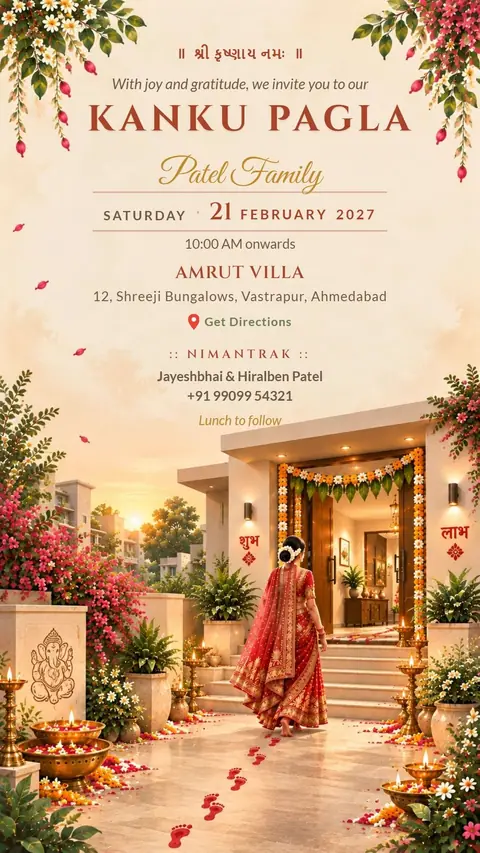 Shubh Labh Kanku Pagla Invitation₹499inc. GST, was
₹998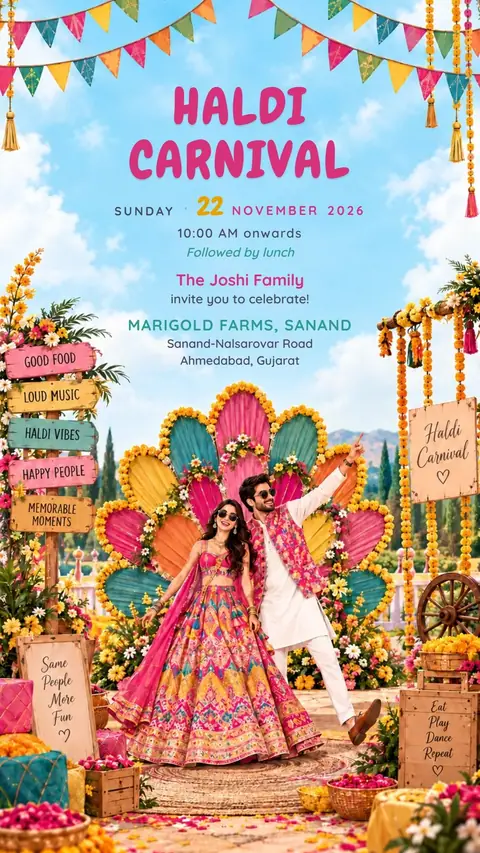 Haldi Carnival Invitation₹499inc. GST, was
₹998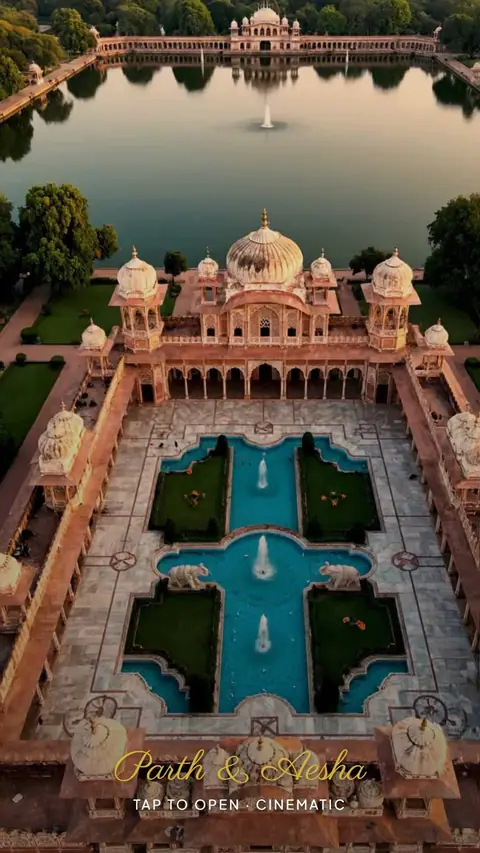 Royal Palace Journey Cinematic Wedding Invitation₹3,499inc. GST, was
₹6,998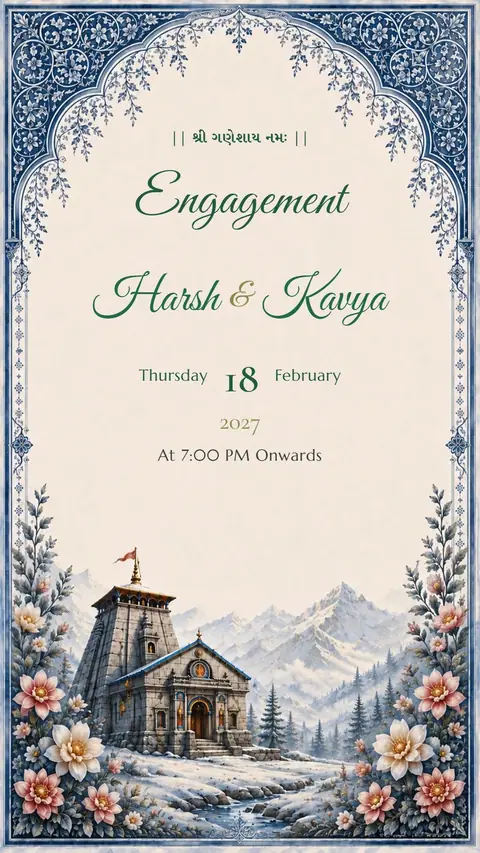 Himalayan Temple Engagement Invitation₹1,499inc. GST, was
₹2,998 Godh Bharai Baby Shower Invitation₹499inc. GST, was
₹998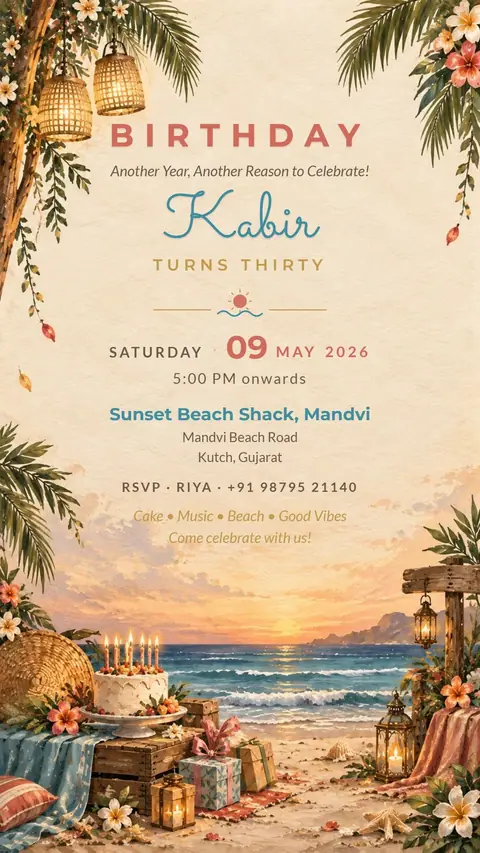 Beach Birthday Invitation₹499inc. GST, was
₹998 Haldi Ceremony Invitation₹499inc. GST, was
₹998
Filed under Festivals
Written by ShubhLink Editorial Team
The team behind ShubhLink's invitation templates and ShubhLink AI. We write down what families ask us most, and check each guide before it goes live.